

Before You Go—Let’s Boost Your Leads!
Join our community of successful HVAC and Plumbing contractors who trust Klutch Growth to enhance their online presence.
Klutch Growth Blog
How to Grow Your HVAC Business: A Step-by-Step Guide to Success
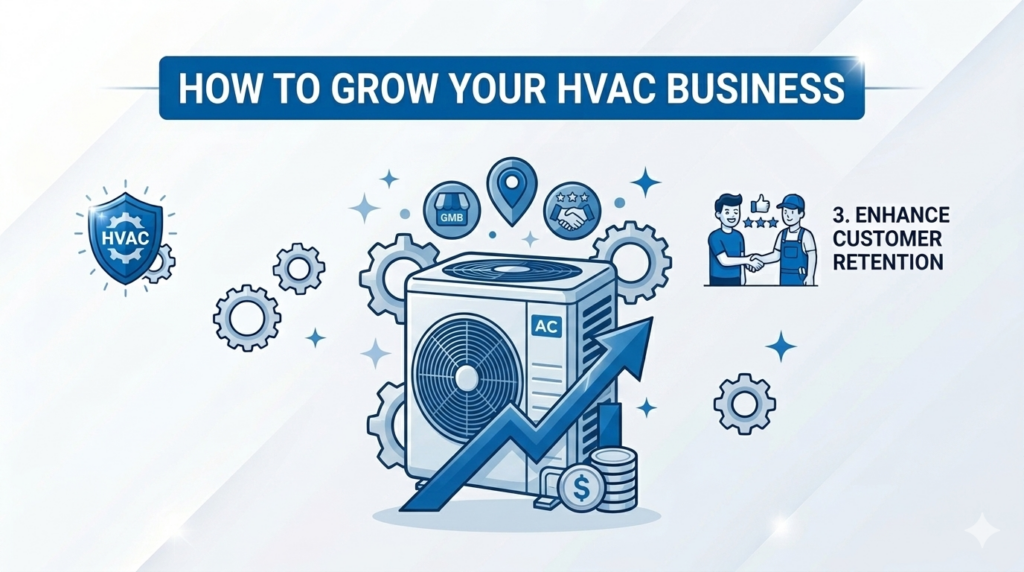
The key steps to grow your HVAC business
Growing an HVAC company in today’s competitive market requires strategic planning, and understanding how to grow a HVAC business is key to unlocking sustainable success. From rising competition in cities to the demand for energy-efficient systems, HVAC businesses face unique challenges in attracting customers and scaling operations.
Yet, opportunities abound for those ready to innovate and optimise. This article offers a step-by-step guide to help you expand your HVAC business, whether you’re a small contractor or an established firm. You’ll discover practical strategies—covering branding, local SEO, customer retention, and more—to boost leads, streamline operations, and enter new markets.
By implementing these proven tactics, you can stand out in your community, increase revenue, and build a thriving business. Start your journey to scaling your HVAC company today with this comprehensive roadmap to success.
Understanding the HVAC market and growth opportunities
It’s essential to understand the kind of market you are working in. Here are some ideas on how to understand the HVAC market and identify growth opportunities.
-
What are the current trends in the U.S. HVAC industry?
The U.S. HVAC market is now driven by demand for eco-friendly systems and innovative technologies, such as Wi-Fi-enabled thermostats. Homeowners in states like California prioritize energy efficiency, while commercial clients seek advanced HVAC solutions. Staying ahead of these trends is critical to understanding how to grow your HVAC business and capitalize on emerging opportunities.
-
Identifying growth opportunities
One way to expand is by targeting underserved U.S. markets, such as rural areas needing seasonal maintenance. Another approach is through commercial contracts, such as retrofitting office buildings, which offer high-value revenue streams. For HVAC lead generation, focus on homeowners attempting to upgrade to sustainable systems, a growing segment in urban centers. These opportunities align with U.S. consumer priorities and boost profitability.
-
Assessing your HVAC business’s current position
You must evaluate your business’s strengths, weaknesses, opportunities, and threats through a SWOT analysis. Are you competitive in a crowded market? Do you have the capacity for larger projects? This assessment helps you pinpoint gaps, like outdated marketing, and set priorities for scaling in the U.S.
-
Setting Clear Growth Goals
You need specific goals to guide your growth, such as increasing revenue by 20% or adding 100 new clients annually. Clear targets keep your HVAC business focused, ensuring strategies align with long-term success in a competitive landscape.
Step-by-step guide to scaling your HVAC business
Step 1: Build a strong brand identity
-
Why branding matters for HVAC businesses
You need a strong and memorable brand to stand out in the U.S. HVAC market, where customers are faced with numerous options. A distinct identity is crucial for fostering trust and loyalty, which in turn drive repeat business and referrals. Branding is the foundation for learning how to grow an HVAC business effectively.
-
Creating a memorable logo, tagline, and mission statement
You should design a professional logo that reflects your U.S.-based HVAC services, paired with a tagline like “Cooling Texas Homes.” Your mission statement must emphasize reliability and quality, resonating with American homeowners and businesses seeking dependable providers in competitive markets.
-
Establishing trust through a professional website and online presence
You can’t afford an outdated website in the U.S., where customers research online before making a purchase or hiring a service. Ensure that you build a sleek, mobile-friendly site that showcases your services, certifications, and customer testimonials. Include clear contact information and service areas, such as the Phoenix metro, to attract local clients and boost credibility.
-
Leveraging local branding to stand out in U.S. communities
You must embrace local branding to connect with your audience. Sponsor community events or advertise in local media to build recognition. Utilize truck wraps featuring your logo for increased visibility in neighborhoods. These efforts establish your HVAC business as a trusted name in U.S. towns and cities, fostering word-of-mouth growth and reputation.
Step 2: Master local SEO and digital marketing
-
Optimize for local search
You can boost your SERP rankings with local SEO for HVAC by optimizing your Google My Business (GMB) profile with precise service areas, like “HVAC repair in Charlotte.” Add local keywords to your site to dominate the Local Pack and drive growth in competitive American markets.
-
Create service area pages for nearby cities
You should craft service area pages for each U.S. city you serve, such as “Raleigh HVAC services.” Include unique content, local keywords, and Google Maps to enhance visibility. These pages attract American customers searching for nearby providers, expanding your reach without the need for physical offices.
-
Run targeted PPC campaigns for HVAC services
You can leverage digital marketing for your HVAC company through pay-per-click (PPC) ads on Google. Target high-intent keywords like “emergency HVAC repair” to reach U.S. homeowners fast. PPC campaigns deliver quick leads, helping you scale in busy markets.
-
Using social media to engage local U.S. customers
You must use platforms like Facebook and Instagram to connect with American communities. Share HVAC maintenance tips or seasonal promotions to build engagement. Posting customer success stories fosters trust, encouraging clients to choose your services over those of your competitors.
-
Prioritize online reviews and reputation management
You need to prioritize online reviews to strengthen your reputation. Encourage clients to leave Google reviews and respond promptly to feedback. Managing negative reviews professionally builds credibility, making your business a top choice for American customers and supporting the growth of your HVAC business.
Step 3: Enhance customer acquisition and retention
-
What are your strategies for generating leads?
You can attract new U.S. customers by implementing smart lead generation tactics. Create referral programs offering discounts to clients who recommend your HVAC services. Partner with local U.S. businesses, such as real estate agencies, to gain access to homeowners who need installations, thereby expanding your client base.
-
Offer promotions and seasonal maintenance plans
You should entice customers with targeted promotions, such as discounted spring tune-ups. Offer seasonal maintenance plans to ensure recurring revenue, appealing to homeowners in regions like Florida with year-round cooling needs. These plans secure long-term clients, supporting the steady growth of your HVAC business.
-
Build customer loyalty through exceptional service and follow-ups
You must deliver top-notch service to retain U.S. clients. Train your technicians to consistently exceed expectations, ensuring every job reflects the highest level of professionalism. Follow up with customers via email or calls to check satisfaction. Personalized service builds loyalty, encouraging repeat business and positive word-of-mouth in American communities.
-
Use CRM tools to manage customer relationships
You can streamline customer interactions with CRM tools like ServiceTitan, a popular choice in the U.S. HVAC industry. Track client preferences, service history, and follow-up schedules to personalize outreach. A well-managed CRM helps you nurture relationships, convert leads, and retain customers, making it easier to scale in competitive markets.
Step 4: Streamline your operations for scalability
-
Invest in efficient scheduling and dispatching software
You can boost efficiency by adopting U.S.-popular software like Housecall Pro to manage appointments. Automate scheduling for technicians in cities, reducing downtime and ensuring timely service, a critical step for scaling in competitive American markets.
-
Hire and train skilled technicians to meet demand
You must recruit qualified technicians to handle your growing demand. Offer ongoing training on modern HVAC systems, like smart thermostats, to maintain quality. A skilled team enables you to take on more jobs, supporting the effective growth of your HVAC business.
-
Standardizing processes for consistent service quality
You should implement standardized procedures for installations and repairs to ensure consistency across U.S. service areas. Create checklists for tasks, such as maintenance in harsh winters, to deliver reliable results. Uniform processes build trust and enable seamless scaling.
-
Scaling fleet and equipment to handle larger contracts
You need to expand your fleet and invest in advanced tools to tackle larger U.S. projects, such as commercial contracts. Upgrade to energy-efficient diagnostic equipment to stay competitive. A robust infrastructure ensures you can meet increased demand without compromising service quality.
Step 5: Expand your service offerings and markets
-
Add high-demand services
You can attract more U.S. customers by offering trending services like smart thermostat installations or indoor air quality solutions. These appeal to eco-conscious homeowners, expanding your revenue streams and strengthening your market position.
-
Target commercial clients for bigger projects
You should pursue commercial contracts, such as servicing office buildings in Atlanta, to boost profits. Larger projects require updated SEO for HVAC companies to rank for terms like “commercial HVAC services,” ensuring visibility among U.S. businesses seeking reliable providers.
-
Expanding to new geographic areas in the U.S.
You can scale by targeting new U.S. regions, such as suburban areas near Phoenix, where demand for HVAC services is increasing. Create service area pages for these locations to capture local searches, supporting your mission on how to grow a HVAC business in untapped markets.
-
Partnering with manufacturers or suppliers for exclusive offerings
You must forge partnerships with U.S. manufacturers to offer exclusive products, like high-efficiency HVAC units. These deals differentiate your business, appealing to American customers seeking premium solutions and fostering loyalty through unique service packages.
Step 6: Measure and sustain growth
-
Key metrics to track
You must monitor key metrics, such as revenue growth, customer retention rates, and lead conversion, to gauge the progress of your U.S. HVAC business. Tracking calls from new clients in Miami, for example, shows marketing effectiveness, guiding how to grow a HVAC business.
-
Use analytics tools
You can leverage U.S.-popular tools like Google Analytics to analyze website traffic and user behavior. QuickBooks tracks financial performance, revealing trends in profit. These tools help you assess growth in competitive markets, ensuring data-driven decisions.
-
Adjust your strategies based on performance data
You should refine strategies using data insights. If your Seattle service area page underperforms, consider tweaking its content or boosting local ads to improve its performance. A/B testing CTAs can improve conversions, keeping your U.S. HVAC business agile and competitive.
-
Plan for long-term sustainability
You need to reinvest profits into training or equipment to sustain growth. Stay updated on U.S. HVAC trends, like energy-efficient systems, to remain relevant. Long-term planning ensures your business thrives in dynamic markets.
Overcoming obstacles to your HVAC business growth
Obstacles are a constant in business. Having a strategy for tackling these obstacles is as vital as having the necessary resources to scale your HVAC business. Here are some quickfire strategies to overcome obstacles you might face while scaling your HVAC business.
-
Address operational inefficiencies
You can overcome growth barriers by streamlining your U.S.-based operations. Inefficient scheduling in busy markets wastes resources. Use software like ServiceTitan to optimize technician routes, ensuring you meet demand without delays.
-
Strengthen your marketing efforts
You must tackle weak marketing to attract customers. A poorly optimized website fails to rank in local searches. Invest in SEO and update your Google My Business profile to drive leads, supporting your endeavor to grow your HVAC business.
-
Manage cash flow challenges
You’ll face cash flow issues when scaling in the U.S. Overinvesting in equipment without steady revenue strains finances. Use QuickBooks to track expenses and secure financing to maintain stability.
-
Retain quality staff
You can’t scale without skilled technicians. High turnover disrupts service in competitive U.S. regions. Offer competitive wages and training on modern HVAC systems to retain talent, ensuring consistent quality as you grow.
Conclusion
Knowing how to grow an HVAC business equips you to thrive in the competitive U.S. market. This guide outlines six steps—branding, local SEO, customer retention, operations, service expansion, and obstacle management—to help you scale your company effectively. By implementing these strategies, you can boost leads and secure commercial contracts in your service area.
Take action now to elevate your HVAC business. Begin by auditing your website, refining your marketing strategy, and streamlining your operations. Monitor progress with analytics to ensure sustainable growth. With dedication, you can transform your U.S.-based HVAC company into a local powerhouse, driving revenue and fostering customer loyalty.
Recent Posts
March 21, 2026
March 20, 2026
February 20, 2026